
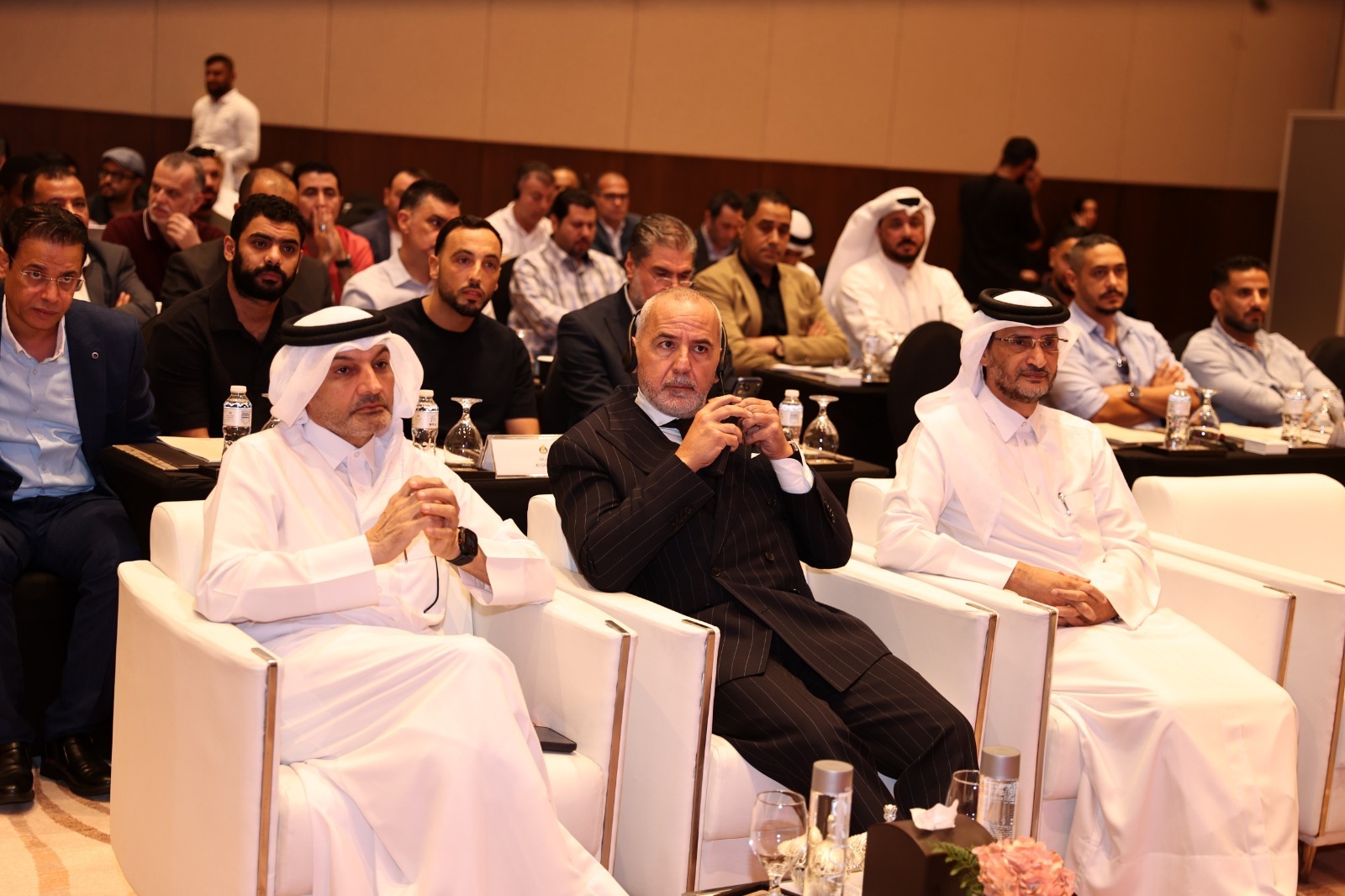
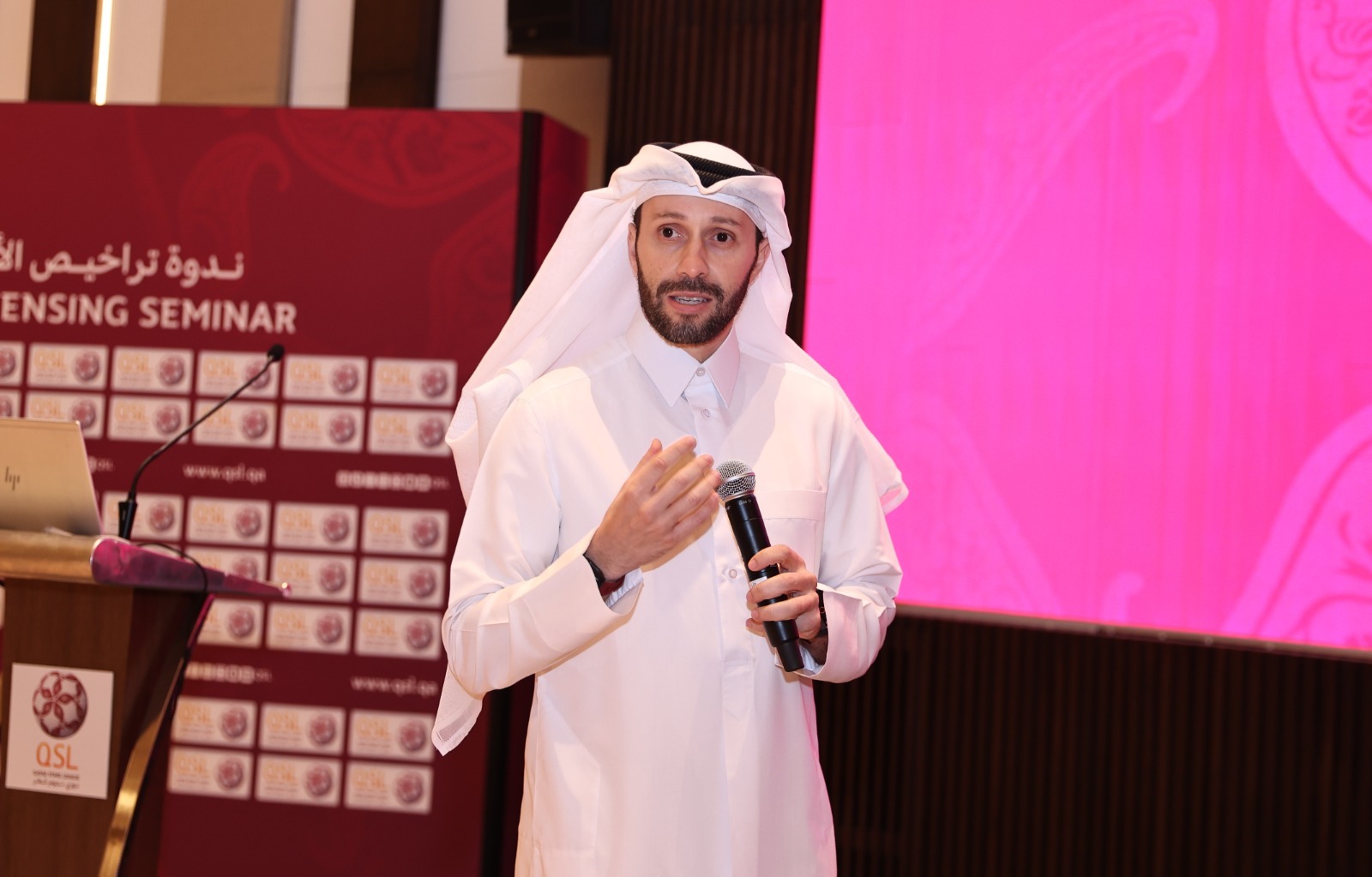
The Qatar Stars League (QSL) organized its annual workshop on Club Licensing. It was attended by representatives from clubs in Doha Bank Stars League and Jetour League, with clubs from QSL3 league also participating as observers. The workshop was attended by Mr. Hani Taleb Ballan, CEO, and Dr. Ahmed Khellil Abbassi, Executive Director of Competition and Football Development.
The workshop opened with welcoming remarks from Dr. Abbassi, followed by an overview of the agenda.
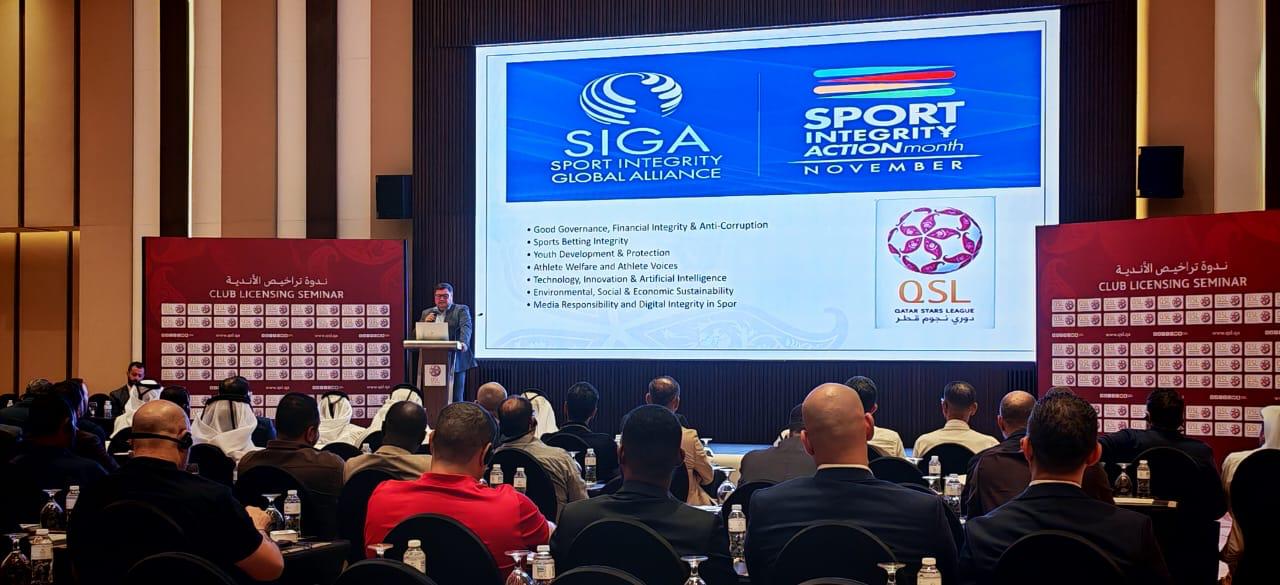
The session highlighted the partnership between QSL and Sport Integrity Global Alliance (SIGA). It also covered key activities and initiatives undertaken by SIGA during the month of November, which focus on several critical areas, including good governance, financial integrity, youth development and protection, as well as media responsibility and digital integrity in sports.
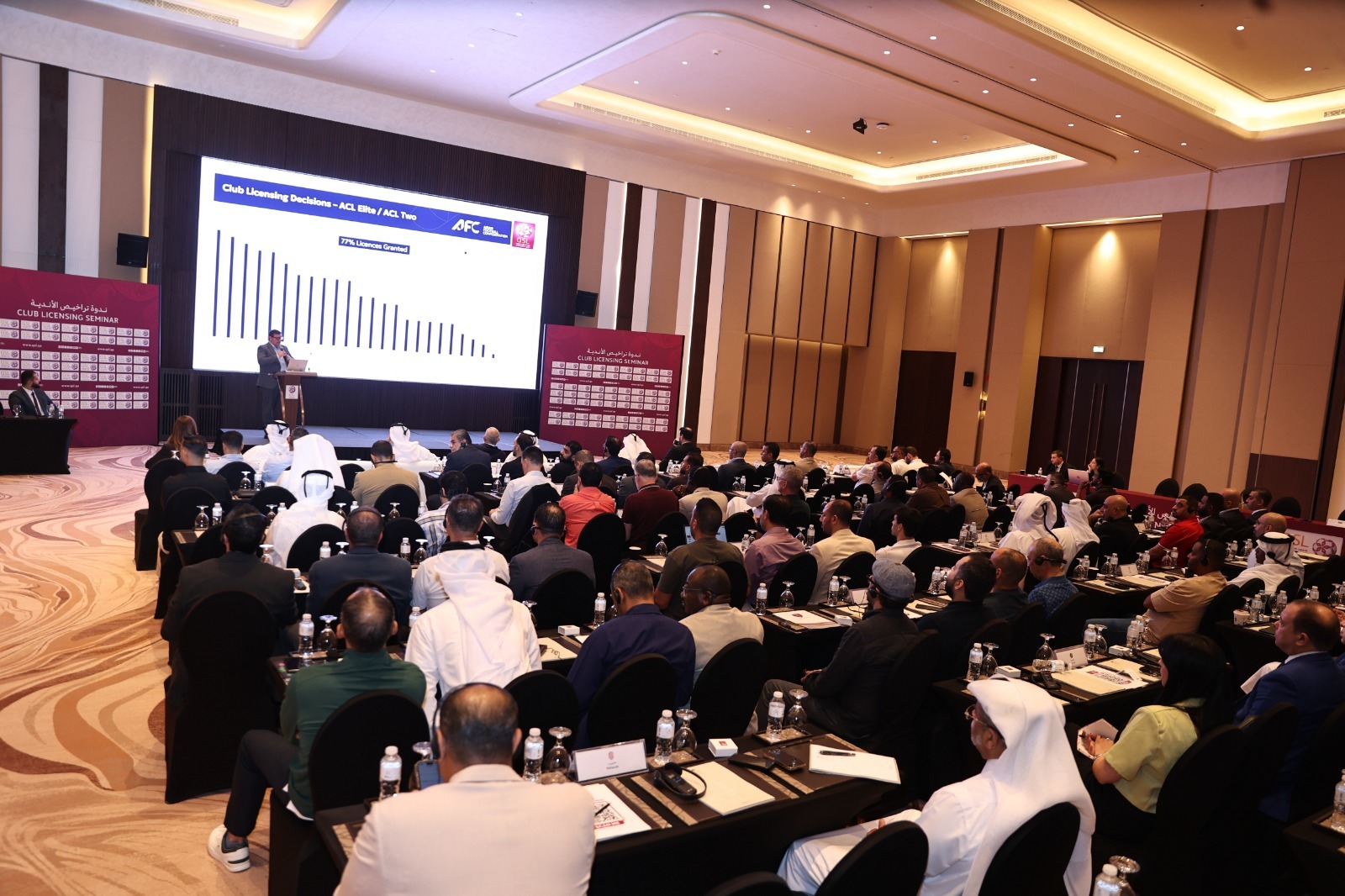
The workshop addressed the latest updates from Asian Football Confederation (AFC) regarding the Club Licensing system, introduced new standards and amendments to existing requirements, and provided an overview of the core functions of AFC’s Club Licensing Administration System (CLAS) and reviewed key financial requirements and associated procedures, all aimed at enhancing the clubs’ readiness and ensuring that they meet the stipulated criteria.
The session also reviewed updates regarding the requirements and procedures for the Club Participation Agreement (CPA) for 2026-2027 season. The objective was to clarify relevant obligations and regulatory mechanisms while strengthening co-ordination between QSL and clubs to ensure implementation aligning with established frameworks.
The workshop provided an opportunity for club representatives to raise enquiries and discuss technical as well as administrative aspects related to the licensing process. This helped enhance the clarity of procedures, standardize operational mechanisms and ensure the highest levels of efficiency and compliance.
The workshop was also part of QSL’s ongoing efforts to support clubs, develop their administrative and organizational capabilities, and embed the principles of governance, sustainability and professionalism. Such initiatives aim to boost the efficiency of overall operational ecosystem, contribute to the development of competitions, and elevate their technical and organizational standards.










 Back To Home